E-invoicing in India: who must do it and the free option

Since 1 August 2023, GST e-invoicing is compulsory for businesses whose turnover passed ₹5 crore in any year from 2017-18. Each B2B invoice must be reported to one of six government-authorised portals for a reference number, and that core service is free on all of them. Since 1 April 2025, businesses at ₹10 crore and above must report within 30 days.
Perspectives
Why it helps
One upload returns a signed invoice with a QR code, the portal can also make the e-way bill, and NIC offers a free Excel tool for small firms.[3][4]
Watch out for
An invoice that should have been e-invoiced but was not is not treated as an invoice, and portals refuse late reports from firms at ₹10 crore and above.[1][5]
Paid extras
Portals may charge for extras such as storage beyond 48 hours or GSTR-1 reconciliation, and GSTN has no role in what they charge.[3]
The limit fell from ₹10 crore to ₹5 crore on 1 August 2023, and it looks at every year from 2017-18 onwards[2]. So once covered, you stay covered. The e-invoice portal still shows ₹5 crore today[1].
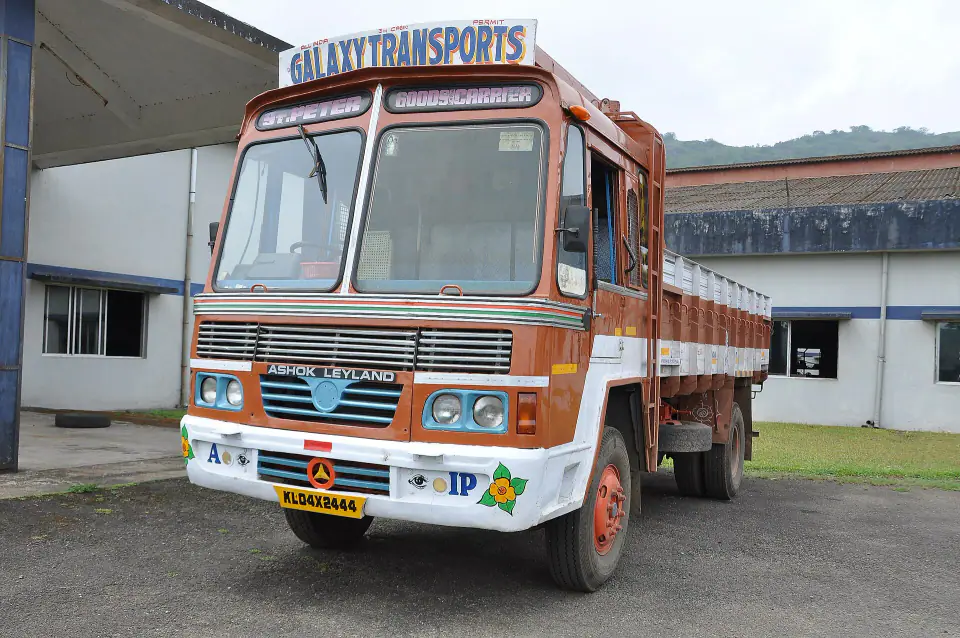
A goods carrier waiting for its load. Once an invoice has its IRN, the same portal can also make the e-way bill for the goods. Image: shankar s. from Dubai, united arab emirates, CC BY 2.0, via Wikimedia Commons.
You send each B2B invoice, credit note or debit note to an Invoice Registration Portal (IRP), which signs it and returns an Invoice Reference Number (IRN) with a QR code[1]. Two IRPs are run by NIC, the government's IT agency, and four by Cygnet, Clear, EY and IRIS[1].
GSTN says reporting and IRN generation are free on every IRP[3]. Without accounting software, use GePP on NIC's first portal: a free Excel form for entering invoices one by one, updated in February 2026[4].
But the rule has teeth. An invoice that should have gone through an IRP and did not is not treated as an invoice[5]. Businesses at ₹10 crore and above cannot report invoices older than 30 days[1]. Banks, insurers, goods transport agencies, SEZ units and a few other sectors are exempt[6].
More may come: the 57th GST Council in October 2026 recommended adding imported services and reverse charge purchases from unregistered sellers[7]. See what else the 57th Council changed. The limits below this are in our GST guide for small sellers.
If you are near ₹5 crore, check your enablement status on the e-invoice portal and choose an IRP before you cross[1].
Sources
- GST e-Invoice Portal: IRP details, enablement status and latest updates (GSTN) einvoice.gst.gov.in
- CBIC lowers turnover threshold for e-invoicing to INR5 crores with effect from 1 August 2023 (EY India tax alert) ey.com
- E-Invoice: Services offered by the four new IRPs (GSTN advisory, updated 1 August 2023) tutorial.gst.gov.in
- Bulk Generation Tools: GePP, GST e-Invoice Preparing and Printing Tool (NIC e-Invoice 1 portal) einvoice1.gst.gov.in
- Central Goods and Services Tax Rules, 2017, Rule 48: Manner of issuing invoice taxinformation.cbic.gov.in
- Manual: e-Invoice Exemption Declaration Form (GSTN) einvoice.gst.gov.in
- Recommendations of the 57th Meeting of the GST Council (Ministry of Finance press release, 8 October 2026) gstcouncil.gov.in
Quote this answer on your site
Free to quote with the link. Copy this HTML:
Cite this: “E-invoicing in India: who must do it and the free option.” Cybe Blog, 14 Nov 2026. https://cybe.blog/p/e-invoice-limit-small-business-india-5-crore-free-irp How to cite
How this answer was made: researched and drafted with AI assistance from the sources above, reviewed by Sai Dharshan S, and checked against our editorial policy. Spotted an error? Tell us.
Cybe Blog is made by CyberFreezeDev, an AI consultancy and generative AI studio in Chennai, India. Work with CyberFreezeDev